
RCOT’s Building Health into Homes: Why Housing is Every Occupational Therapists Business
 By Kate Sheehan, Occupational Therapist
The home has always sat at the centre of occupational therapy thinking, and for good reason. The vast majority of the activities we want, need and have to do take place there. And yet it is often the design of our homes, their state of repair, or the conditions in which people are housed, that creates disability, drives ill health, and limits independence before a referral ever reaches us. It is this thinking that sits at the heart of the Royal College of Occupational Therapists’ Building Health into Homes project, and why it matters to all of us.
The UK is in the grip of a housing crisis that goes beyond headline numbers. It is not simply that we do not have enough properties, though we do not. It is that too many people are housed in homes that were never designed to support disability or to help us age in place, in properties that are overcrowded or in poor repair, or in temporary accommodation that compounds vulnerability. The current government has set out a prevention agenda for health and social care, and it is the right ambition. But without fundamentally getting housing right, that agenda will always fall short, regardless of how much we invest in clinical services, rehabilitation, or reablement downstream.
Occupational Therapists are arguably the profession best placed to bridge that gap, and the reason sits in the E of the PEO (Person, Environment, Occupation) model. We understand, in a way few other professions do, how the built environment shapes everyday occupation. That knowledge positions us to work with planners and architects to get homes right from the outset, with housing teams to match people’s needs to the right properties, with case managers and insurers supporting those with catastrophic injuries, and with discharge teams to ensure that housing never becomes the reason someone stays in hospital longer than they need to. We are, in housing terms, something of a hidden gem and more strategic leaders across housing, health, and social care need to know it.
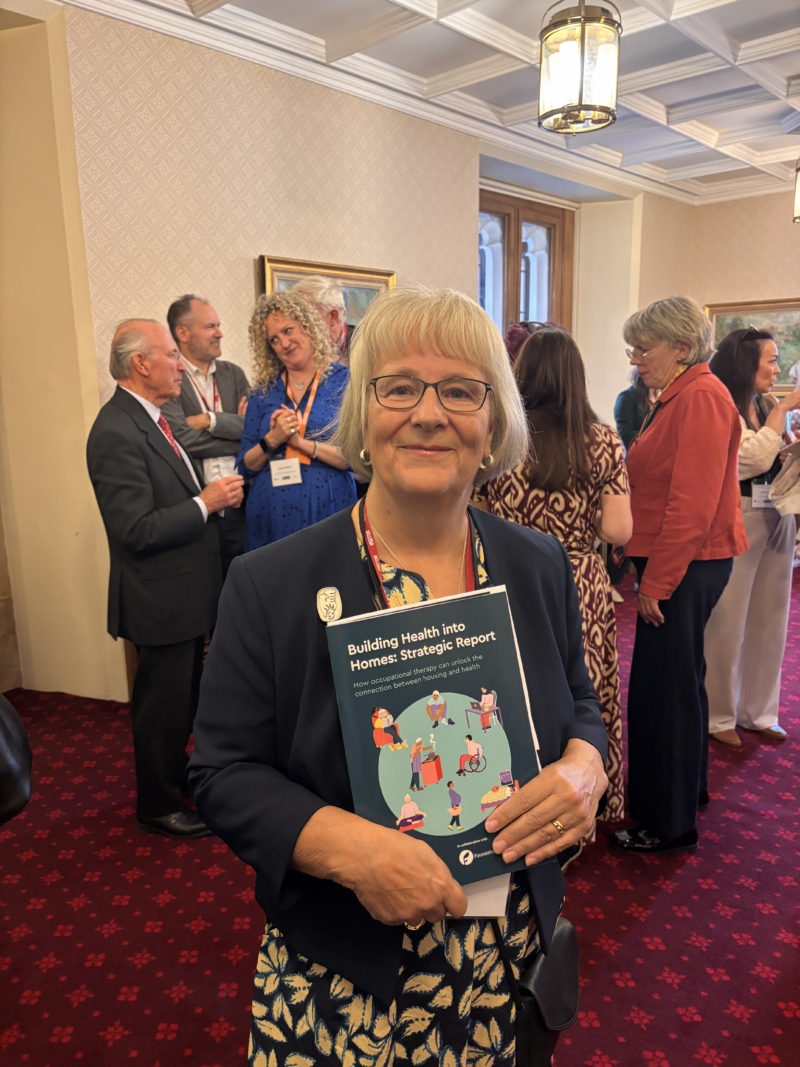
This is precisely RCOT’s ambition with Building Health into Homes. Through three toolkits, RCOT is working to put occupational therapy where it belongs in the housing system. The strategic report, published on 10th June, makes the case to system leaders and draws on work already happening across the four nations to demonstrate how Occupational Therapists are already solving housing-related pressures on the NHS and social care. For those working operationally, a dedicated toolkit identifies eight distinct OT roles within housing, supported by implementation case studies, role profiles, and business case templates to help services make it happen.
But perhaps the most thought-provoking element is the practitioner toolkit, which asks all Occupational Therapists, regardless of setting, to reflect on their own relationship with housing. It is easy to assume that housing is someone else’s specialism. Yet every person on every Occupational Therapist’s caseload lives somewhere. Consider an Occupational Therapist working in neurology with someone newly diagnosed with multiple sclerosis or motor neurone disease. Where does the conversation about long-term housing fit? Are we thinking about the design of that person’s home as an opportunity to support them to thrive, before significant functional change arrives? Taking a public health approach means seeing housing as a key determinant of health and that is a conversation every Occupational Therapist is equipped to have.