

Share why #BathingIsBetter!
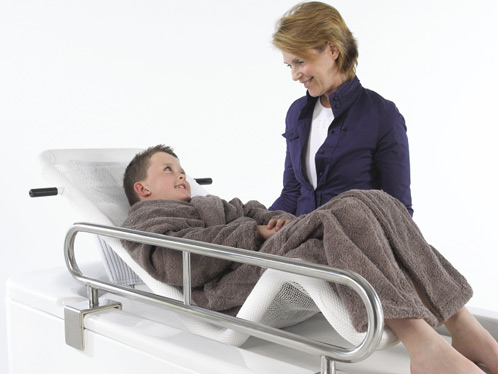
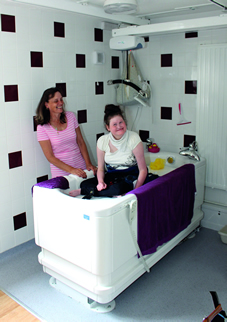
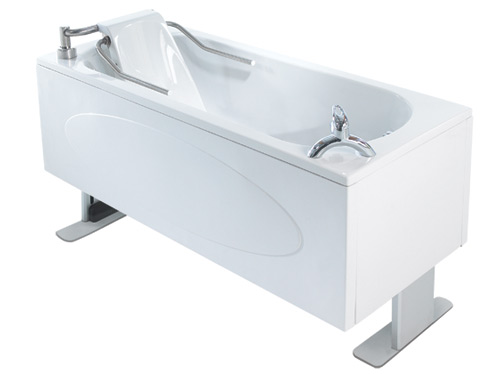
A specialist Abacus power-adjustable bath (Hi-Lo bath) will provide safe and comfortable bathing for many users living with disability. If access to a standard bath is difficult or impossible, then a specialist Hi-Lo bath with powered functions will assist disabled bathers so they can get in and out more easily.
Abacus Hi-Lo baths can include powered bather transfer seats, height adjustment, integrated changing/drying platforms, additional adaptive features and bespoke postural supports. All these functions deliver a more enjoyable bath-time for disabled adults and children and provide safer working heights for carers and parents. By eliminating manual lifting and lowering of disabled bathers carers can avoid potential back injury or muscle strain. Healthcare professionals such as Occupational Therapists also appreciate the many benefits of safe access to a specialist bath for their disabled clients – in terms of improved wellbeing, dignity and care. However when applying for a Hi-Lo bath through a Local Authority facilities grant, many families are only offered funding for an accessible wet room conversion. This commonly is not the preferred solution for disabled bathers and carers.
Most children and adults living with a disability in the UK prefer to bathe rather than shower. Nevertheless many Disabled Facilities Grants (DFG) will only provide funding for accessible showering adaptations or wet rooms. This viewpoint can be regularly based on the misconception that an accessible bath is more expensive to specify than conversion of an existing bathroom – in many situations this is simply not true. The clear benefits of bathing versus showering when living with disability may also not be fully recognised or appreciated.
Healthcare professionals involved with bathing grant applications will assess what is ‘necessary and appropriate’ as part of their duty of care. However if a bath is not provided in some circumstances, a detrimental outcome on lifestyle, well-being and independence may be likely.
Hence if you decide that a Hi-Lo bath is the right solution for you, your disabled dependent or your client, Abacus has compiled the following points to help justify your opinion.
Legislative facts that justify the provision of a Hi-Lo bath
Wellbeing-related benefits of bathing instead of showering
Bathing can have a positive effect on many aspects of life when living with a disability. Having access to a specialist Hi-Lo or fixed height bath with transfer seat does not only provide safer bathing, the act of bathing itself can improve many day-to-day activities outside of the bathroom. In general terms, wellbeing, engagement, mobility and mood can be improved whilst pain and discomfort can be reduced. Key factors to consider regarding bathing:
Safety benefits of choosing a Hi-Lo bath instead of an accessible wet room
Using a standard bath can be unsafe for many semi-ambulant (partially mobile) bathers and their carers. Bathers who are unable to get in and out of the bath unaided, may be at risk to injury from falls and slippages. Carers are also at risk of back and muscle strain from manually lifting and lowering bathers in and out of the bath. Benefits of owning a Hi-Lo bath include:
Practical and cost benefits of choosing a Hi-Lo bath instead of an accessible shower
There are many lifestyle benefits to be gained from ownership of a power-adjustable bath as opposed to an accessible wet room or shower. These can range from improved convenience, safety and peace of mind for a wider range of users or a whole family. A specialist Hi-Lo or static bath with or without a powered bather transfer seat can be fitted more easily than a wet room and ongoing costs can be less. The latest assisted baths from specialists such as Abacus include quality and reliable components so require less servicing and maintenance – hence more cost effective that periodical refurbishment of watertight surfaces and fittings. In summary Abacus baths offer:
Benefits to Occupational Therapists of prescribing a Hi-Lo bath for clients
All Healthcare Professionals understand they have a duty of care to ensure their clients receive the right assistive equipment to maximise care, independence and dignity. Nevertheless certain local authorities are increasingly under pressure to only grant the cheapest accessible bathing solution that can commonly be regarded as conversion of an existing bathroom to a wet room or accessible shower, not a Hi-Lo bath. Meeting available budgets whilst meeting client needs is indeed a challenge these days however installation of an adjustable bath can offer a more cost effective, long-term solution. The needs and wishes of the client should always be preferential if possible. Most families prefer to retain a bath at home and respite care centres regard access to bathing as essential for utmost client care.
The following points can be considered if your client wants an assisted bath and your feel it is ‘necessary and appropriate’ despite being only offered an adaptive showering solution via a DFG:
Useful videos for Healthcare Professionals
In association with Abacus Healthcare, Kate Sheehan, Occupational Therapist, presents a series of videos on the importance of Hi-Lo bath provision. In these videos she explains:
View all of the videos below