
Beyond Bubbles: Why the Meaning of Bathing Changes as Children Grow
 By Kate Sheehan, Occupational Therapist
As occupational therapists, when we talk about bathing and children with disabilities, the conversation often centres on their play and sensory experience. However, that is only part of the picture. Bathing is an activity whose meaning and purpose shifts as a child grows, and if we are to get our recommendations right, we need to design for the child’s whole development into adulthood and beyond – not just look at a snapshot in time.
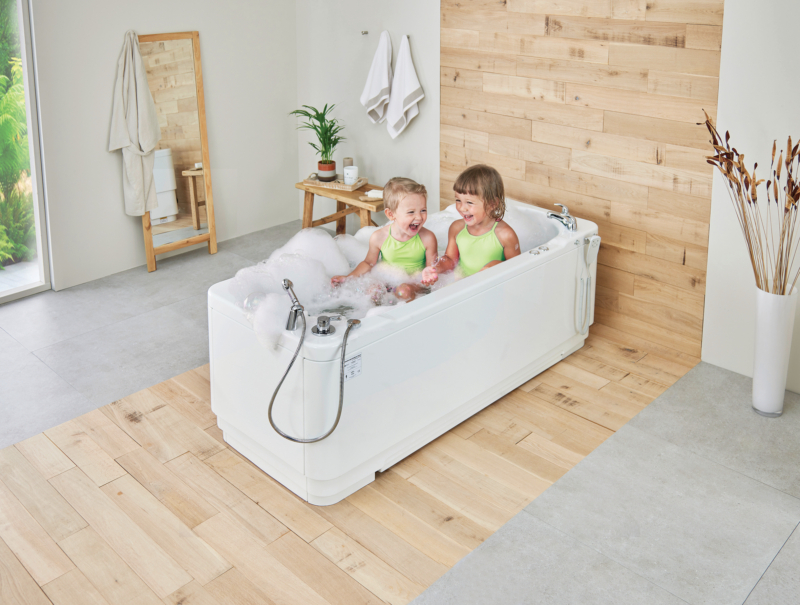
One of the key considerations when recommending and designing adaptations is ensuring that the solution will meet the long-term needs of the client. When working with children with long-term conditions, we are not only thinking about how the condition may progress but also considering that a child will grow physically and move through developmental milestones that change their relationship with everyday activities.
Bathing is a prime example. When bathing a baby, the main objective is to ensure the child remains clean and safe. As the baby becomes a toddler, the meaning shifts: it becomes a sensory experience, a space for play and, for the parent or carer, it serves as a time of interaction and communication. As the child grows through the school years, the focus shifts again. Through play and routine, the child begins to gain independence and develop an understanding of why personal hygiene matters – not just as something done to them but as something they take ownership of. By adolescence, autonomy deepens further and the need for privacy and dignity becomes central to the bathing experience.
This matters for practice, as we need to take a sustainable approach – not just financially and environmentally, but in terms of the child’s lived experience. A bathing solution that works well for a six-year-old may not work for the same child at twelve or thirteen.
So how do we address this? It starts with the assessment. When we assess a child’s bathing needs, we need to look beyond what is necessary and appropriate right now and ask what will be necessary and appropriate in five or ten years’ time. What does this child’s developmental trajectory look like? How will their need for independence and privacy change? What level of carer involvement is likely to be acceptable to them as they grow? These are questions that should be built into the assessment process rather than treated as afterthoughts.
It also means bringing parents into an honest conversation about the future. These are not always easy discussions. Talking to the parents of a young child about their future needs requires sensitivity. However, having that conversation early can shape significantly better outcomes. It may mean making compromises over the immediate solution in order to provide something that will remain appropriate as the child develops. It may mean choosing adaptations that offer flexibility, rather than selecting the option that best meets today’s needs alone.
Getting this right requires us to think beyond function and into meaning. It asks us to consider not just “can this child be bathed safely?” but “how can this bathing arrangement respect who this child is becoming?”.